General Organization of Body Systems
Gross Anatomy · Foundations
Introduction
Introduction to the Organization of Body Systems
The human body is an incredibly complex biological machine that relies on a structured hierarchy to maintain life. From the smallest microscopic atoms to entire multi-organ networks, every component works in perfect harmony. Understanding anatomy and physiology requires grasping this structural hierarchy—the levels of structural organization—and discovering how various distinct organ systems cooperate to keep an organism alive, functional, and structurally stable.
Study
Levels of Structural Organization
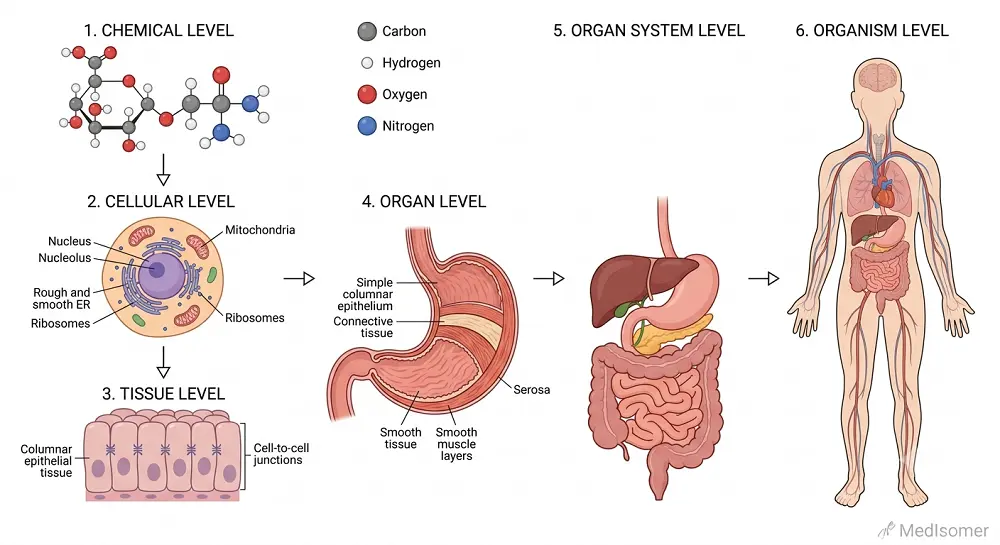
The structural organization of the human body is traditionally broken down into six distinct levels: 1. Chemical Level: The foundation of all structures. It involves atoms (such as carbon, hydrogen, oxygen, and nitrogen) combining to form molecules like water, proteins, carbohydrates, and DNA. 2. Cellular Level: Molecules interact to form cells, which are the basic structural and functional units of an organism. Examples include muscle cells, nerve cells, and blood cells. 3. Tissue Level: Groups of similar cells and the extracellular material surrounding them work together to perform a specialized function. The four primary tissue types are epithelial, connective, muscular, and nervous tissue. 4. Organ Level: Composed of two or more different types of tissues that cooperate to perform specific functions. Organs have recognizable shapes (e.g., the stomach, heart, liver, lungs, and brain). 5. Organ System Level: A group of interrelated organs working together to accomplish a common vital purpose. For example, the digestive system includes the esophagus, stomach, small and large intestines, liver, gallbladder, and pancreas working collectively to process food. 6. Organismal Level: The highest level of organization. It represents the total collection of all organ systems functioning together to maintain the life and health of a single individual.
Overview of Core Body Systems
The human body consists of 11 interdependent organ systems, each performing unique and critical roles: - Integumentary System (Skin, hair, nails): Protects the body from environmental hazards, regulates temperature, and provides sensory information. - Skeletal System (Bones, cartilages, ligaments): Provides structural support, protects internal organs, allows movement via muscle attachments, stores minerals, and produces blood cells (hematopoiesis). - Muscular System (Skeletal muscles, tendons): Produces movement, maintains posture, and generates body heat. - Nervous System (Brain, spinal cord, nerves): Acts as the fast-acting control center, regulating body activities by detecting internal and external changes, interpreting them, and sending electrical signals. - Endocrine System (Glands like pituitary, thyroid, adrenal, pancreas): Controls long-term or systemic physiological changes by secreting regulatory chemical messengers (hormones) directly into the bloodstream. - Cardiovascular System (Heart, blood vessels, blood): Pumps and circulates blood to deliver oxygen, nutrients, and hormones to tissues while carrying metabolic waste products away. - Lymphatic/Immune System (Lymph fluid, vessels, spleen, thymus, lymph nodes): Returns leaked tissue fluids to the blood stream and mounts defenses against foreign pathogens. - Respiratory System (Lungs, trachea, nasal cavity, pharynx): Performs gas exchange, delivering oxygen to the blood and removing carbon dioxide waste from it. - Digestive System (Mouth, stomach, intestines, liver): Breaks down food mechanically and chemically, absorbs essential nutrients into the blood, and eliminates solid ingestible wastes. - Urinary System (Kidneys, ureters, urinary bladder, urethra): Filters waste products out of the blood, regulates fluid balance, electrolyte balance, and acid-base status of the body. - Reproductive System (Gonads—testes/ovaries, associated ducts/glands): Functions primarily to produce gametes (sperm and oocytes) and hormones to ensure the survival and continuation of the species.
Summary
Summary of Body Systems Organization
In summary, the human body exhibits a clear hierarchy from atoms up to the complete living organism. No single organ system operates in complete isolation; they are highly integrated networks. For instance, the nervous system sends signals to the muscular system to move the skeletal system, while the cardiovascular system delivers the oxygen required for that movement, provided by the respiratory system. Disruptions at any single level or within any specific system can compromise homeostasis and trigger pathological conditions across the entire organism.